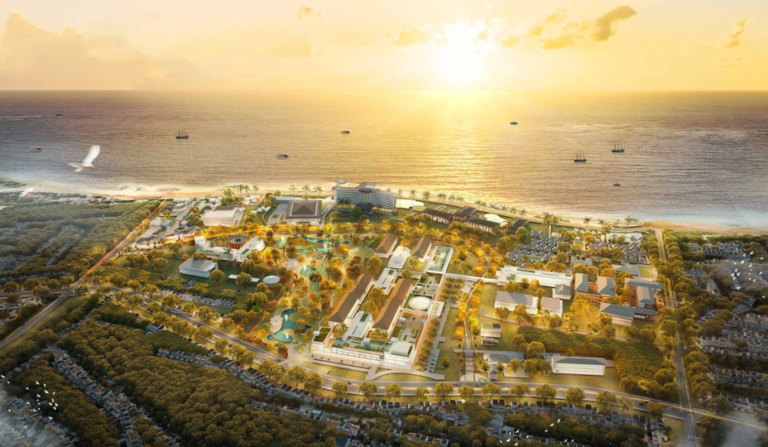
Indonesia is exploring an ambitious plan to position Bali not only as a tourist destination but also as an emerging financial hub for Asia. The initiative aims to attract international banks, asset managers, and investment firms to stimulate the country’s long-term economic growth.
A vision for economic transformation
The proposal, backed by President Prabowo Subianto, draws inspiration from successful international models such as India’s Gujarat International Finance Tec-City (GIFT City) and Dubai’s International Financial Centre (DIFC). The envisioned “Bali Financial City” would offer a modern, transparent financial environment designed to reduce bureaucracy and streamline business processes.
To achieve this, Indonesia is considering a specialized legal and regulatory framework for the financial zone which is potentially modeled after Singapore’s highly regarded system. This approach aims to create a more efficient and investment-friendly climate while maintaining Indonesia’s commitment to inclusive and sustainable development.
Building trust and attracting global capital
According to Jodi Mahardi, spokesperson for the National Economic Council, the new financial center is intended to become “a platform that connects global investments with real opportunities in Indonesia’s real economy.” The initiative aligns with Indonesia’s broader economic goals which are revitalizing investment, strengthening growth, and creating new jobs.
International interest in the project appears to be growing. Ray Dalio, founder of Bridgewater Associates, is reportedly among its supporters and serves as an informal advisor to the president. While details are still being finalized, officials are preparing a draft proposal that may be presented to parliament later this year.
Economic context and opportunities
Indonesia’s economy is the largest in Southeast Asia and it has shown resilience despite recent headwinds. With growth forecasts of 4.9% in 2025 and a national target of 8% by 2029, the government is seeking innovative ways to mobilize investment. The total required investment is estimated at 13,000 trillion rupiah (around 784 billion USD) to achieve these ambitious goals. A well-designed financial hub in Bali could serve as a catalyst for this next stage of development.
Balancing growth and sustainability
While the vision is ambitious, it also presents challenges. Bali’s success as a tourism hotspot has raised concerns about overdevelopment and pressure on natural resources. Questions remain about how the island can balance its cultural heritage, environmental sustainability, and the influx of new business infrastructure.
Proponents argue that Bali’s global appeal, strong connectivity, and lifestyle advantages make it an ideal location for a regional financial center. With careful planning and investment in infrastructure and environmental management, Bali could evolve into a diversified economic hub while preserving its unique identity.
Learning from regional examples
Bali’s potential transformation fits within a broader Asian trend, where countries are developing specialized financial zones. Malaysia continues to strengthen its position in Islamic finance, while Vietnam is planning international financial centers in Ho Chi Minh City and Danang. These examples highlight the region’s growing dynamism and competition in the financial sector.
A forward-looking opportunity
Though still in the conceptual stage, the plan represents a forward-looking effort to integrate tourism, finance, and innovation. If successful, Bali’s evolution into a financial hub could complement its world-renowned tourism industry. This creates new opportunities for sustainable investment, skilled employment and international collaboration.
As the plan develops, one thing is clear: Bali’s next chapter may no longer be defined solely by its paradise beaches but by its emergence as an island of opportunity.